
Blog · 2026-11-28
Basement Ducts: Why Below-Grade Runs Get Dirtiest First
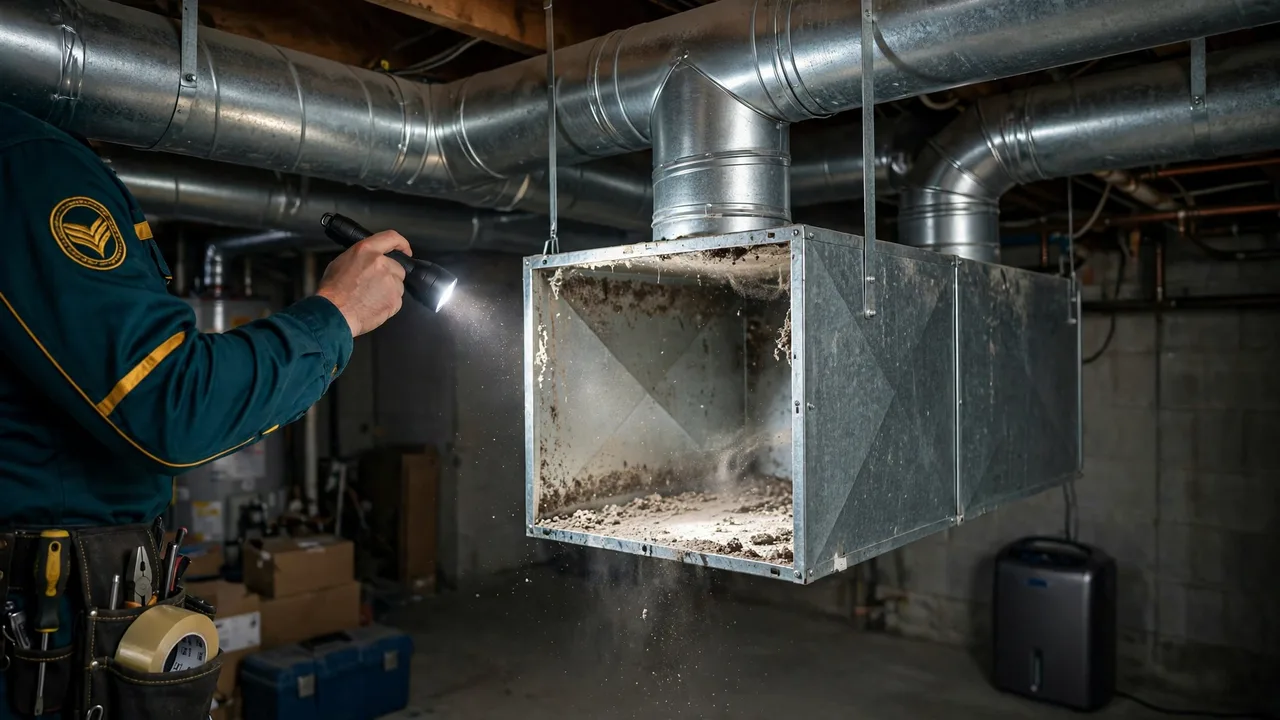
The fast answer: basement ductwork usually gets dirtiest first because it sits at the bottom of the system, close to moisture, dust and the air handler itself. Trunk lines and returns in a basement or crawlspace collect what settles, what leaks in at loose joints, and what summer humidity leaves behind. If your home in Beltsville, Silver Spring or Columbia has a musty basement smell that travels upstairs when the system runs, the below-grade runs are the first place to look — often with a camera inspection before any cleaning is booked.
Gravity works against basement ducts
Dust and debris do not distribute evenly through a duct system. Heavier particles settle where airflow slows, and the long, wide trunk lines in a basement ceiling are exactly where air slows and turns. Every time the system stops, a share of what was moving settles onto the bottom of those runs. Add years of foot traffic dust from the floor above, laundry lint in basement laundry rooms, and storage dust from boxes and shelves, and the below-grade section becomes the reservoir for the whole house. That is why a full-system air duct cleaning always includes the trunk lines and plenum — cleaning only the registers upstairs leaves the heaviest load untouched.
Moisture is the second problem — and the bigger one
Maryland basements are humid for much of the year. Cold supply ducts running through warm, damp basement air sweat in summer, and that condensation can wet the dust layer inside and around the ducts. Moisture plus dust is the combination behind musty odours and growth on buildup. Our guide to mould in air ducts explains the boundaries honestly: cleaning removes the dust layer growth lives on, and duct sanitizing can treat cleaned surfaces, but neither fixes a moisture source that keeps returning. If a basement dehumidifier drains constantly, a sump runs often, or duct insulation looks damp or stained, name that when you call — it changes what we check first.
Basements are also where the system breathes in
The air handler and the main return usually live in the basement. That means the dirtiest air path in the house — the return side, carrying dust, hair, dander and fibres from every room — converges below grade before it reaches the filter. Loose return joints in a basement can also pull in basement air itself: storage dust, laundry lint and whatever a workshop or utility room puts into the air. Our explainer on return vents versus supply vents shows why the returns collect the load first and heaviest, and a basement is where that effect is strongest.
Five basement checks you can do this weekend
Smell at startup. Stand in the basement when the heat or cooling first kicks on. A musty blast that fades is different from one that returns every cycle — the second points inside the system. Look at exposed trunk lines. Dust streaks at joints, rust staining or damp insulation are useful clues. Check the filter and blower area. A filter that loads fast, covered in our furnace filter guide, often reflects a heavy below-grade load. Clear stored items away from returns and the air handler so air and access are not blocked. Note finished versus unfinished areas. A finished basement in Bethesda or Rockville with ceiling ducts behaves differently from an open utility basement in Bowie or Laurel — tell us which you have when you book.
What a proper basement-focused cleaning includes
The work follows the same published cleaning standard as the rest of the home, with extra attention below grade: the main trunk lines and plenum cleaned under sealed negative pressure, every supply and return run brushed, the blower compartment checked, and vent covers washed and reinstalled. The camera goes in before and after, so you see the trunk line that carried the heaviest layer and what it looks like when it is bare metal again. That before-and-after record is the heart of our proof and documentation approach. If the camera finds a crushed flex run in a crawlspace, a disconnected joint, or a section that needs repair rather than cleaning, you hear that plainly — cleaning is not sold as a cure for damaged ductwork.
How to keep basement ducts cleaner between visits
Control moisture first: run a properly drained dehumidifier in humid months and keep stored cardboard and fabric away from duct runs where you can. Keep the area around the air handler clear and vacuum exposed duct exteriors and the return grille area when you change the filter. Do not close off basement supply registers completely for long stretches — a system balanced for those runs moves air oddly when they are shut, and stagnant runs collect more. Homes with pets, a basement laundry, or a recent renovation sit on the shorter cleaning rhythm in our how-often guide, and below-grade load is a big reason why.
When to book — and when to inspect first
Book a cleaning when the signs are clear: visible buildup at the return, dust blowing at startup, a returning musty smell, or a system well past the usual interval. Book the inspection first when you are not sure, when only the basement smells, or when you suspect moisture or damage. Either way, the decision should rest on pictures of your own ducts, not on a sales script.
See what your basement ducts are carrying
Call Eagle Air Duct Cleaning at (855) 640-0404 — answered 24/7 — or use the lead form on this page for a free quote. We serve Beltsville and communities across Maryland, Washington DC and Northern Virginia, and we will show you what is inside your below-grade runs before you decide what they need.
Questions we hear on this topic
Basement trunk lines are wide and slow-moving, so heavier dust settles there, and they sit close to basement moisture, laundry lint and the air handler where the return side converges. That combination loads below-grade runs faster than most upstairs branches.
Cleaning removes the dust layer that moisture affects, and sanitizing can treat cleaned surfaces, but if condensation, a leak or high basement humidity keeps wetting the system, that source has to be corrected or the problem returns. We name the moisture clues we find rather than selling cleaning as a moisture fix.
Yes. A camera inspection shows whether the smell is coming from buildup inside the trunk lines and returns, from a damaged or disconnected run, or from somewhere outside the ductwork — so you pay for the fix that matches the cause.
Want us to look inside your ducts?
Book a cleaning or a camera inspection — and get the seasonal free dryer vent cleaning with a full duct cleaning, same visit.