
Blog · 2026-11-26
Your Furnace Filter and Your Ducts: The Guide Maryland Homes Actually Need
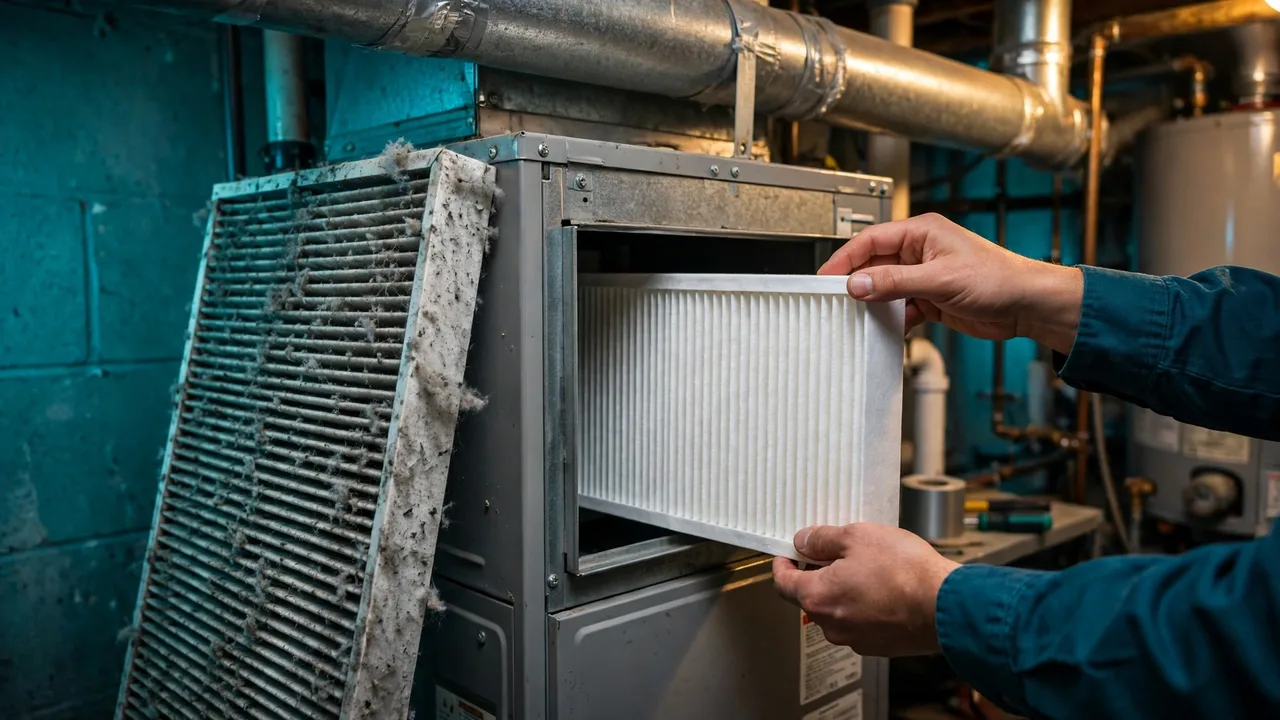
The fast answer: your furnace filter decides how much of what your home puts into the air — dust, pollen, pet dander, carpet fibre — ever reaches the inside of your ductwork. The right filter, in the right size, seated flat with no gaps, changed on schedule, is the cheapest duct maintenance there is. The wrong one does quiet damage in both directions: a filter that is too weak lets the return side load up with the material a full-system air duct cleaning later has to remove, and a filter that is too restrictive for your blower starves airflow, lengthens cycles and makes rooms uneven. Most Maryland homes do best in the middle of the MERV range, changed every one to three months — and the schedule matters more than the brand.
What the filter actually protects
Air leaves your rooms through the return vents, travels the return trunk lines, and passes the filter just before it reaches the blower and coil. Everything the filter catches is material that never coats the blower wheel, never settles on the coil and never gets pushed down the supply runs into your bedrooms. Everything it misses — or that slips around its edges — joins the reservoir inside the system. That is why our explainer on return vents versus supply vents calls the filter the border between the dirty side and the clean side of your ductwork: the returns will always collect a load, because they sit before the filter, but a working filter is what keeps that load from spreading through the whole system.
MERV, explained without the sales pitch
MERV is a rating of how small a particle a filter can catch — the higher the number, the finer what it traps. The honest reading of the scale for a typical home is simpler than the packaging suggests. Low ratings (around MERV 6–8) catch lint, hair and coarse dust: enough to protect the equipment, not much more. The middle range (MERV 9–12) is where most homes belong — it catches the finer dust, most pollen and a good share of dander while still letting a standard residential blower breathe. High ratings (MERV 13 and up) catch finer material still, but they also resist airflow more, and a blower that was not designed for that resistance works harder, moves less air and can leave far rooms in Bethesda or Columbia short of heating and cooling. A higher number is not automatically a better filter for your house. It is a better filter only if your system can push air through it — and if you are not sure, that is a question for an HVAC service visit, not a guess at the store shelf.
Fit matters more than the rating
The most common filter problem we see is not the wrong MERV. It is a filter that does not fit its slot. An undersized or bowed filter leaves gaps at the edges, and air — being lazy — takes the gap instead of the filter media. Unfiltered air then carries its full load straight to the blower and coil, which is how a home that changes its filter religiously can still present with a coated blower wheel on a camera inspection. Check three things when you change yours: the size printed on the frame matches the slot, the filter sits flat on all four sides, and the airflow arrow points toward the blower, in the direction the air travels. Write the size on the furnace door with a marker once, and every future purchase is a ten-second job.
The change schedule that actually works in Maryland
Filter packaging promises months that assume a gentle house. Maryland homes are rarely gentle houses. Check monthly, change on condition is the rhythm that works: a filter that looks grey and felted is done, whatever the calendar says. As a starting point, a home with no pets and no allergy sufferers usually lands at two to three months. A pet home — and our guide to pet dander in your ductwork explains why pets load a system faster than anything else — should expect monthly changes. Allergy households sit at monthly too, and Maryland adds two seasons that shorten every filter's life: spring pollen, when oak and pine coat the county for weeks, and the closed-house winter, when the heating runs for hours a day through the same recycled air. After any renovation, change the filter the day the dusty work ends; it has been catching construction dust for the whole project.
What a neglected filter does to the ducts themselves
A filter left long past its life does not stop working politely. As it loads, airflow drops and the system compensates with longer cycles and more air pulled around the filter's edges instead of through it. Dust that should have been caught at the gate deposits on the blower, the coil face and the first feet of the supply side. Rooms drift uneven and the duct system reaches its cleaning interval sooner. A filter is no substitute for cleaning — the return side loads regardless, on the schedule in our how-often guide — but a neglected filter is the fastest way to make a clean system dirty again.
Five filter habits worth adopting today
Buy the size on the frame, not from memory. Keep one spare on hand — a filter you have gets changed; one you must go and buy waits a month. Date each filter with a marker when it goes in. Never run the system without a filter, even for a day; unfiltered running loads the blower and coil directly. Vacuum the return grilles when you change the filter — the two-minute habit keeps the whole intake path breathing, especially in homes across Beltsville, Silver Spring, Rockville, Bowie and Laurel where one large return per floor does most of the work.
When the filter is not the problem
If you change filters on schedule and dust still returns to furniture within days, vent covers still fur up, or a musty smell still arrives in the first minutes of a cycle, the load is no longer at the gate — it is stored inside the ductwork itself, past the point a filter can reach. That is the reservoir a full-system cleaning empties, following our published cleaning standard, with before-and-after camera photos so you can see the change. Homes working on indoor symptoms often pair the cleaning with our allergy and indoor air quality service, and the dryer vent — a separate line with its own annual rule — can be handled in the same visit through our dryer vent cleaning service.
Small gate, big difference
The filter is a modest part with an outsized job: it is the one piece of duct maintenance entirely in your hands, and ten minutes with it every month or two protects everything a cleaning restores. If you are not sure what state the system behind your filter is in, start with the camera — we will show you your own ductwork on screen and tell you plainly whether it needs cleaning or just a better filter habit. Call Eagle Air Duct Cleaning at (855) 640-0404 — answered 24/7 — or use the lead form on this page for a free quote. We serve Beltsville and communities across Maryland, Washington DC and Northern Virginia.
Questions we hear on this topic
Most Maryland homes do best in the middle of the range, around MERV 9–12: fine enough to catch most pollen, dander and household dust, open enough for a standard residential blower to breathe through. Higher ratings can restrict airflow in systems that were not designed for them — if you want to step up, confirm with an HVAC service visit first.
Check it monthly and change it on condition — a grey, felted filter is done whatever the calendar says. Pet homes and allergy households usually land on monthly changes; homes without pets typically run two to three months. Spring pollen season and the long heating months shorten every filter's life.
Yes. A clogged filter pushes air around its edges instead of through it, and an undersized or bowed filter leaves gaps from the start. The dust that slips past coats the blower and coil and settles into the supply side — which is why a neglected filter brings a duct system to its cleaning interval sooner.
Want us to look inside your ducts?
Book a cleaning or a camera inspection — and get the seasonal free dryer vent cleaning with a full duct cleaning, same visit.