
15 min from our Beltsville HQ · ZIP 20743
Air Duct Cleaning in Capitol Heights, MD
Serving 20743 with negative-pressure HEPA cleaning, a free in-home written quote, and an IAQ Lab Report mailed within 5 business days.
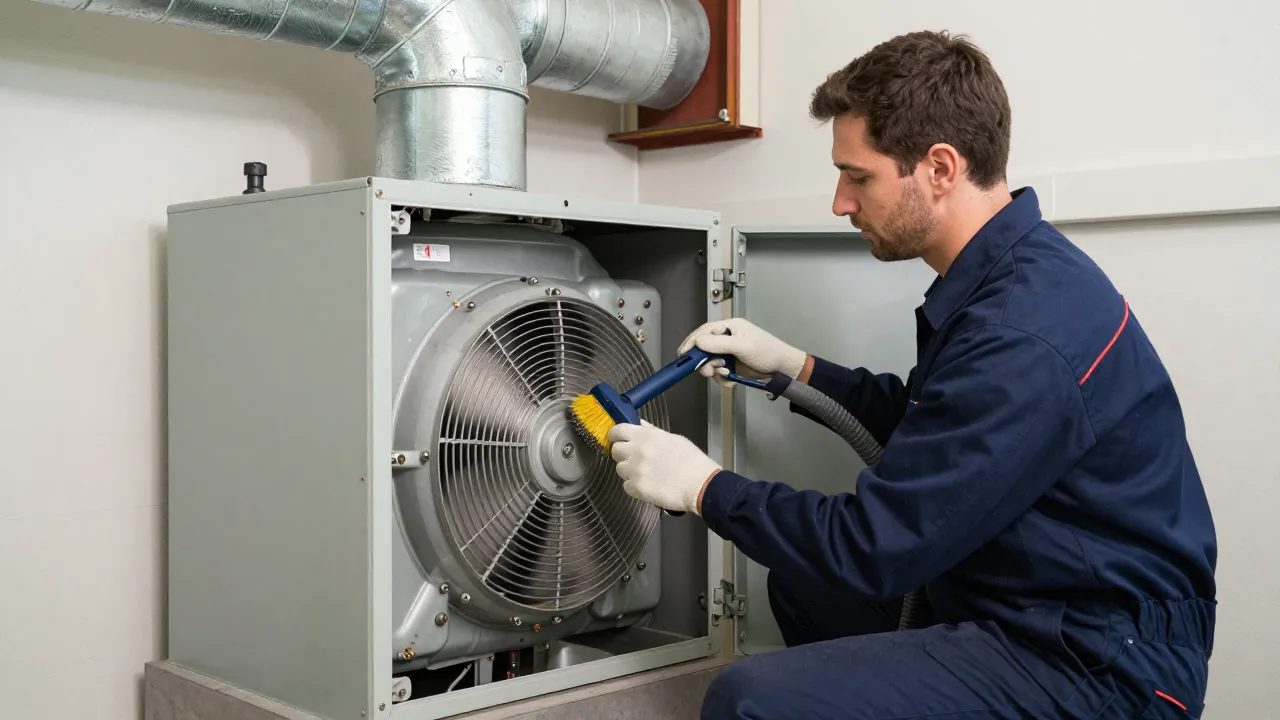
HEPA Source Removal
Negative-pressure process
Live ETA texts
No all-day windows
3rd-Party IAQ Lab
Always included
English & Español
Phone · Email
MHIC #117311
Maryland licensed
Free custom quote
Every Maryland home is different. We quote yours in person.
Vent count, system condition, attic access — they all matter. Tell us about your home and we'll come take a look, measure, and quote in writing. No pressure, no upsell on the truck.
In writing, every time
We hand you the quote on paper before any work starts. If we find more than expected, we stop and ask — never surprise charges.
Independent IAQ Lab Report
Every air-duct cleaning ships with a 3rd-party Maryland-based lab report. Pre vs. post air sample — measurable proof, not marketing.
Licensed & insured
MHIC #117311. Real Maryland address. Real techs in Eagle uniforms — not subcontractors.
Bilingual EN / ES
Hispanic-belt ZIPs get a Spanish-speaking lead tech by default. Hyattsville, Langley Park, Adelphi, Chillum, Takoma Park.
Local service in Capitol Heights
We're about 15 minutes from Capitol Heights from our Beltsville HQ. Same-day service available in 20743.
We've cleaned ducts across Seat Pleasant border, Walker Mill — from older single-family homes to newer townhomes and apartments.
Air duct cleaning in Capitol Heights, MD
Capitol Heights is a close-in community in western Prince George's County, Maryland, covering ZIP code 20743 just inside the Capital Beltway, home to FedExField and served by the Addison Road Metro station. It is a dense, working residential area of older single-family homes, duplexes, and rental properties, with neighborhoods stretching toward the Seat Pleasant border and Walker Mill. Much of the housing here dates to the early and mid 20th century, meaning original or heavily aged forced-air ductwork in many homes, and a high share of rental units where landlords and tenants alike benefit from documented air quality. Air duct cleaning in Capitol Heights MD matters because older systems, dense lots, and a mix of owner-occupied and rental housing all concentrate dust, dander, and allergens in the ductwork. Being just 15 minutes from our headquarters, Capitol Heights is one of the closest communities we serve. Eagle Air Duct Cleaning follows the negative-pressure HEPA source-removal process, and every job ships a third-party Indoor Air Quality Lab Report so renters, owners, and property managers get measured, independent proof of what was removed. We also clean dryer vents, furnaces, carpet, and upholstery,
Maryland climate & your air quality
Capitol Heights sits squarely in Maryland's humid subtropical climate, and its dense, inner-Beltway setting means homes are tightly spaced and HVAC systems work hard year-round. Summers from June through September are hot and humid, and air conditioners run almost continuously; the resulting condensation on coils and inside duct runs combines with settled dust to create ideal conditions for mold, especially in older homes with poor ventilation. Winters are cold enough that furnaces cycle frequently from December through February, drawing dust and dander back through return ducts. Spring brings heavy tree pollen that infiltrates through windows and HVAC intakes, coating duct interiors for weeks, while fall adds leaf debris and outdoor mold spores. Proximity to busy Beltway traffic and the FedExField corridor also keeps fine roadway particulate in the local air, some of which is drawn indoors. Each season loads Capitol Heights ducts in its own way, which is why a measured IAQ Lab Report gives residents a far more honest picture of their indoor air than any visual check.
Capitol Heights homes & HVAC
Capitol Heights has some of the oldest housing stock among the communities Eagle serves, with many single-family homes, duplexes, and bungalows dating to the 1920s through the 1950s, plus mid-century infill and a significant share of rental properties near the Seat Pleasant border and Walker Mill. These older homes often run on aged forced-air systems, sometimes with original sheet-metal ductwork, deteriorated insulation, and decades of accumulated debris, and some have been retrofitted multiple times, leaving mixed and leaky duct runs. The niche angle that fits Capitol Heights is its high proportion of rentals and turnover housing: between tenants, no one truly knows the duct history, and air quality can carry over from previous occupants, including dust, dander, and odors. A negative-pressure source-removal cleaning resets that, and Eagle's included third-party IAQ Lab Report gives landlords, property managers, and incoming tenants independent, measured documentation, exactly the kind of proof that matters when a home changes hands frequently.
Common duct & air-quality issues in Capitol Heights
Early-1900s original ductwork
Capitol Heights has many 1920s-1950s homes still running on original or heavily aged forced-air ducts. Decades of settled debris, crumbling insulation, and leaky retrofitted joints restrict airflow and recirculate dust, which is what a professional source-removal cleaning is designed to address.
Rental turnover and carried-over air
With a high share of rental housing near Seat Pleasant and Walker Mill, ducts often carry dust, dander, and odors from previous tenants. New occupants inherit air quality they had no part in creating, making a documented source-removal cleaning especially valuable between tenancies.
Summer humidity and mold in older homes
Tightly spaced inner-Beltway homes with older ventilation trap humidity, and constant summer AC creates condensation inside ducts. Combined with settled dust, that moisture commonly drives mold growth and musty odors, a frequent issue in Capitol Heights's aging housing stock.
Beltway and roadway particulate
Capitol Heights sits inside the Capital Beltway near the FedExField corridor, where heavy traffic keeps fine roadway particulate in the air. Some is drawn into HVAC intakes and settles in ducts.
Why Capitol Heights chooses Eagle
We clean using the negative-pressure HEPA source-removal process, and every Capitol Heights job includes a third-party Indoor Air Quality Lab Report mailed within roughly five business days, giving owners, renters, and property managers independent, measured proof of results. We are MHIC #117311 licensed and have served Maryland, DC, and Virginia since 2012.
What gets done on a Capitol Heights job
- Pre-clean HEPA-cam inspection of every vent
- Negative-pressure HEPA vacuum cleaning
- Brush + air-whip agitation of duct walls
- Air handler / blower compartment cleaning
- EPA-registered antimicrobial fogging
- Post-clean HEPA-cam verification (every vent)
- 3rd-party IAQ Lab Report mailed within 5 business days
- Live ETA texts so you can plan your day
FAQ — Air duct cleaning in Capitol Heights
How much does air duct cleaning cost in Capitol Heights, MD?
There are no upsells, the price you see is the price you pay, and every job includes a third-party Indoor Air Quality Lab Report mailed within about five business days.
Do you serve all of ZIP 20743 and the Walker Mill area?
Yes. We cover all of Capitol Heights ZIP 20743, including the Seat Pleasant border, Walker Mill, and homes near FedExField and the Addison Road Metro. We are just about 15 minutes from our Beltsville base, one of the shortest drives we make, so our one-hour arrival window, is easy to honor here.
I'm a landlord with rental units. Why clean the ducts between tenants?
In Capitol Heights's high-turnover rental market, ducts often carry dust, dander, and odors from previous tenants that no one can see. A negative-pressure source-removal cleaning resets the air, and our included third-party IAQ Lab Report gives you documented, measured proof of indoor air quality, useful for tenant relations and demonstrating a well-maintained property.
My home is from the 1940s. Can you clean such old ductwork?
Yes. We regularly clean original and heavily aged forced-air ductwork in Capitol Heights's early-20th-century homes. Our negative-pressure HEPA source-removal process is designed for systems with decades of accumulated debris, deteriorated insulation, and retrofitted runs. The included IAQ Lab Report then shows your before-and-after air samples.
How often should ducts be cleaned in Capitol Heights?
The common recommendation is every three to five years, but Capitol Heights's very old housing, rental turnover, humid summers, and Beltway-area particulate can shorten that. Homes with pets, allergy sufferers, or recent tenant changes often need cleaning sooner. Our IAQ Lab Report lets you decide based on measured conditions rather than guesswork.